Executive Interview
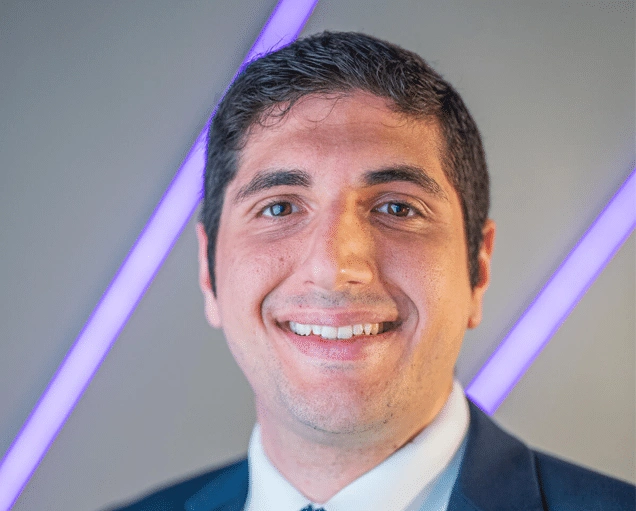
Reuven Verschleisser, CEO of The Caring Clinics
At DocVA, we partner with healthcare organizations to extend their operational capacity through trained virtual medical assistants. Our work puts us in regular conversation with leaders who understand what it takes to deliver consistent, high-quality care at scale.
Today we’re speaking with one of them: Reuven Verschleisser, CEO of The Caring Clinics (formerly BD Health Services), Baltimore’s largest independent MAT clinic network. Specializing in medication-assisted treatment (MAT), outpatient opioid treatment, counseling, and drug testing, The Caring Clinics serves patients navigating recovery from opioid use disorder across multiple locations in the Baltimore region. We asked Reuven to share his perspective on what operational excellence looks like inside one of the region’s most active opioid treatment programs.

Reuven Verschleisser
CEO of The Caring Clinics
The Caring Clinics operates across multiple outpatient locations in Baltimore. How does access to care (logistically and operationally) influence patient retention and recovery outcomes in MAT programs?
Answer from Reuven Verschleisser: Our patients come to us in some of the most difficult moments of their lives, balancing work, transportation challenges, family obligations, and the physical demands of early recovery. When care is hard to reach (long waits, limited hours, complicated intake), people disengage. As an OTP offering more access points for outpatient opioid treatment than any other locally operated OTP in the region, our multi-site model exists precisely to reduce those barriers. The result is a network designed to keep patients in treatment long enough to make it work.
Opioid use disorder carries a stigma that many other medical conditions don’t. How does that shape the way The Caring Clinics trains staff to communicate with patients?
Answer from Reuven Verschleisser: Stigma is one of the biggest barriers to people seeking treatment in the first place, and it doesn’t disappear once someone walks through our door. Patients are often hyperaware of how they’re perceived, especially early in treatment. Staff who communicate with judgment (even unintentionally) can undo trust that took weeks to build. We treat patient-facing communication as a clinical skill, not just a customer service expectation. That means consistent training around language, tone, and how to handle difficult situations without making a patient feel like a problem to be managed. In a regulated OTP environment, that standard has to be embedded across every role, administrative and clinical alike.
In opioid treatment, what kinds of knowledge and judgment can’t be replaced by generic administrative experience?
Answer from Reuven Verschleisser: When a patient calls to reschedule and sounds distressed, a well-trained team member knows that may signal a need for a counselor flag or an expedited appointment. That contextual awareness comes from immersion in a clinical environment: staff who understand HIPAA as it applies to substance use records, who know how to communicate compassionately in sensitive situations, and who understand regulated OTP workflows are genuine contributors to clinical outcomes. That understanding holds whether they’re working on-site or providing virtual support.
Consistency seems to be a recurring theme in addiction recovery. How important is it in building patient trust across different phases of the treatment journey?
Answer from Reuven Verschleisser: Patients in opioid treatment programs often come from environments where trust has been broken repeatedly (by systems, by relationships, by prior treatment experiences). When they encounter consistency (familiar staff, clear expectations, predictable structure), it builds the psychological safety that makes recovery possible. At The Caring Clinics, we follow patients from stabilization through later recovery phases, and the continuity of that care is central to what keeps people engaged. In this context, we believe predictability itself is therapeutic.
Extend Your Practice’s Operational Capacity
See how trained virtual medical assistants can support patient communication, scheduling, follow-through, and administrative workflows.
Book a DemoWhat lessons from running a high-volume addiction treatment network do you think apply to other healthcare organizations trying to improve patient retention and follow-through?
Answer from Reuven Verschleisser: The biggest one is that follow-through is an operational problem as much as a clinical one. Most healthcare organizations invest heavily in appointment quality of care and underinvest in everything surrounding it: scheduling, communication, the handoffs between departments, what happens when a patient goes quiet. In addiction medicine, those gaps are highly visible and the stakes are immediate, which forces you to take them seriously. But the same dynamics exist in chronic disease management, behavioral health, and any setting where continuity matters. The practices that retain patients longest tend to be the ones that have designed the full experience around the patient’s real-world constraints, not just their clinical needs.
Better Patient Continuity Starts With Better Operational Support
DocVA helps healthcare practices extend their teams with trained virtual medical assistants who work within established workflows and support the patient experience beyond the appointment itself.
Book a Demo