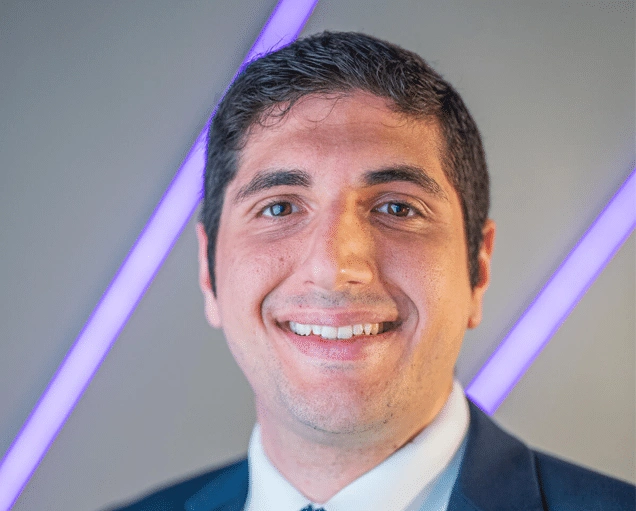




Q: You have been in podiatric surgery for over forty years. What has changed most about how patients approach treatment?
A: Patients are far more informed and far less patient with unnecessary suffering. They come in having done their research, and they are not willing to accept a long, painful recovery if a better option exists. That shift has been healthy for medicine. It pushes physicians to keep evolving and to stop defaulting to the way things have always been done just because it is familiar.
Q: What problem were you trying to solve when you developed the HyperFlex® Bunion Correction Device?
A: For decades, the standard approach to bunion surgery involved cutting bone, which meant significant recovery time, weeks of non-weight bearing, and a level of disruption to patients' lives that caused many of them to delay treatment until they were in serious pain. I wanted to find a way to correct the problem earlier and with far less trauma. HyperFlex® uses a flexible implant to realign the bones without cutting them, which changes the recovery experience entirely.
Q: What does recovery actually look like for patients using HyperFlex®?
A: HyperFlex® is a minimally invasive, 30-minute procedure performed in an ambulatory surgery facility. Most patients do not require opioids after surgery and instead manage discomfort with a dual-action Advil® regimen. Patients are typically back in a sneaker within two weeks and walking at least 10,000 steps per day by six weeks. Walking is encouraged as part of the recovery process, helping patients return to normal activity much faster than traditional approaches. Because HyperFlex® preserves the natural structure and function of the foot rather than permanently altering it, patients often experience both a smoother recovery and strong long-term outcomes.
Q: Running an innovative practice also means managing a lot behind the scenes. How do you think about the operational side of delivering this kind of care?
A: It is something every independent physician has to take seriously. The clinical work only happens well when the infrastructure supports it. Scheduling, patient communication, documentation, follow-up care, all of it has to run smoothly or it creates friction that affects the patient experience. Practices that invest in the right support systems, whether that is staffing, technology, or both, are the ones that can actually deliver on the promise of better care.
Q: What would you tell a physician who is thinking about adopting a new approach or technology but is not sure where to start?
A: Start with the patient outcome and work backward. Ask yourself what is getting in the way of delivering the best possible result for the person in front of you. Sometimes it is a clinical gap. Sometimes it is an operational one. Usually it is both, and solving them together is what actually moves the needle. The practices that thrive are the ones that treat innovation as ongoing rather than as a one-time event.
About Dr. Josef Geldwert
Dr. Josef Geldwert is a board-certified podiatric surgeon with over 40 years of experience specializing in bunion surgery, biomechanics, and sports medicine. He is the inventor of the HyperFlex® Bunion Correction Device, an FDA-cleared implant system that corrects bunion deformities through a soft tissue approach that preserves bone and joint integrity, making him the only surgeon in the world using a device of his own creation.
Dr. Geldwert serves as the official podiatrist for the U.S. Open Tennis and co-directs the New York City Triathlon medical program, with a long track record of treating elite athletes and active patients who need to return to movement quickly. Appropriate HyperFlex candidates can walk the same day of their procedure, with most returning to regular footwear within weeks. Dr. Geldwert sees patients at his state-of-the-art facilities in Rye Brook, New York and Midtown Manhattan.